
Proof
Make water. Test it. Drink it.
We don't ask anyone to take this on faith. The proof is in the water - produced from the sea, tested in the lab, and drunk by the people who built it.

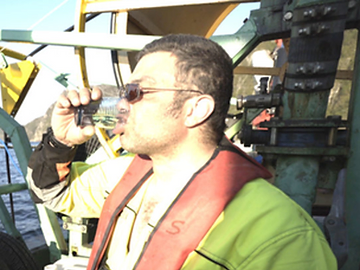
One of our team members with the Nordhordaland bridge in the background, drinking Waterfountain water direct from the hose.
Tested in the sea
Every prototype has been deployed in real Norwegian coastal waters - not a tank, not a simulation. The ocean approved or rejected each design.
Lab-verified output
Water produced by the system has been tested in the lab for quality. Then we drank it - the most direct proof that the process works.
A decade of iteration
Ten years of field testing means the surviving design isn't theoretical. It's the version the ocean couldn't break.
Energy Efficiency
50% more effective
Designed to be 50% more energy efficient than other desalination methods of similar scale - lower operational costs and enhanced sustainability. Average consumption of ~2.2 kWh/m³, with even lower results measured in operation.
~2.2 kWh/m³
Waterfountain energy consumption
3–5 kWh/m³
Traditional reverse osmosis
45%
Share of desalination costs attributed to energy
50%
Energy efficiency improvement vs. traditional methods
Bergen testlab · 2026
From our 2026 test lab in Bergen, Norway, we have achieved the following - verified results from a decade of work at sea.
No chemicals requiredExtraction without harmful chemical additives - proven and third-party verified by SINTEF. | |
50% lower operating costsHalf the energy of traditional reverse osmosis translates directly into lower operational costs. | |
35% lower construction costsFloating, modular deployment removes the need for costly coastal infrastructure. | |
Renewable energy readyCan be powered by solar, wind, shore power, or alternative energy sources. | |
90% less land requiredOffshore floating design means minimal land use and no pretreatment footprint. | |
95% less brine salinityNatural ocean currents wash away concentrated saltwater at depth - no brine problem. | |
Relocatable & removableUnits can be relocated or removed - leaving no permanent trace on the seabed. | |
Zero emissionsA completely sustainable desalination process with no harmful emissions in operation. |
Intellectual property
Protected where it matters
The Waterfountain process is patented and patent-pending across the markets where desalination is needed most.
8+
Countries with granted patents
Patents granted across multiple jurisdictions protecting the core process.
29
Countries with patents in progress
Active applications pending review in jurisdictions worldwide.
From the field
Ten years on the water
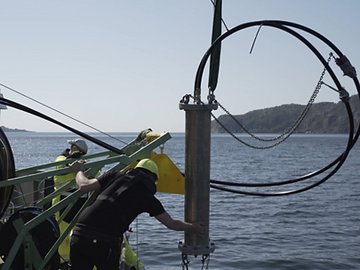
These aren't renders. They're the dock, the boat, the night shift, and the people who kept going.




The record
Every milestone, tagged honestly
Product design and early simulations - defining the concept.
HistoricalDevelopment and simulation refinement - validating the physics.
HistoricalWF+ commercial module finalized - the compact, deployable unit.
VerifiedWF10 platform concept defined for infrastructure-scale output.
TargetOngoing field operations and partner validation in Nordhordland.
VerifiedWe tag every claim with its status - Verified, Historical, Target, or Needs Validation - because trust in water technology has to be earned, not assumed.